Your Easy Car Maintenance Checklist
Regular maintenance on your petrol or diesel-fuelled vehicle matters way more than you think. Servicing your car is like taking it in for a health checkup – it’s not just

When we think about vehicle safety, our minds usually jump straight to the obvious candidates – the brakes that stop us, the tyres that grip the road, and the airbags that protect us in a collision. However, there is a silent partner in your car’s safety system that is frequently overlooked, despite being one of the most critical components for keeping your car under control. Your shock absorbers.
As experts in tyres at Mag & Turbo, we often see customers coming in for a new set of wheels or a fresh set of tyres, only to discover that their suspension is significantly compromised. The problem with shock absorbers is that they don’t usually fail overnight. Instead, they degrade slowly over tens of thousands of kilometres. Because the change is so gradual, your brain actually adjusts to the worsening ride quality, leading you to believe the car is performing just fine, right up until the moment it’s not.
Petrol prices have not been kind to New Zealand drivers lately, and if you have been wincing every time you pull into the forecourt, you are not alone. While most people look at driving habits or the price board at the pump, one of the most practical things you can do to reduce fuel costs is sitting right underneath your vehicle.
Your tyres are the only point of contact between your car and the road. Choose the wrong ones, run them at the wrong pressure, or ignore your wheel alignment, and your engine is constantly working harder than it needs to. The good news is that fixing this is genuinely straightforward, and the savings add up faster than most people expect.
Not all tyres are engineered with fuel economy in mind. A fuel-efficient tyre is designed to minimise rolling resistance, which is the force required to keep your vehicle moving forward. The less energy your tyres waste fighting the road, the less fuel your engine burns to maintain speed.
Tyres affect fuel use through rolling resistance, the effort required for your vehicle to move forward. Well-maintained tyres help reduce fuel consumption while improving safety and performance on New Zealand roads.
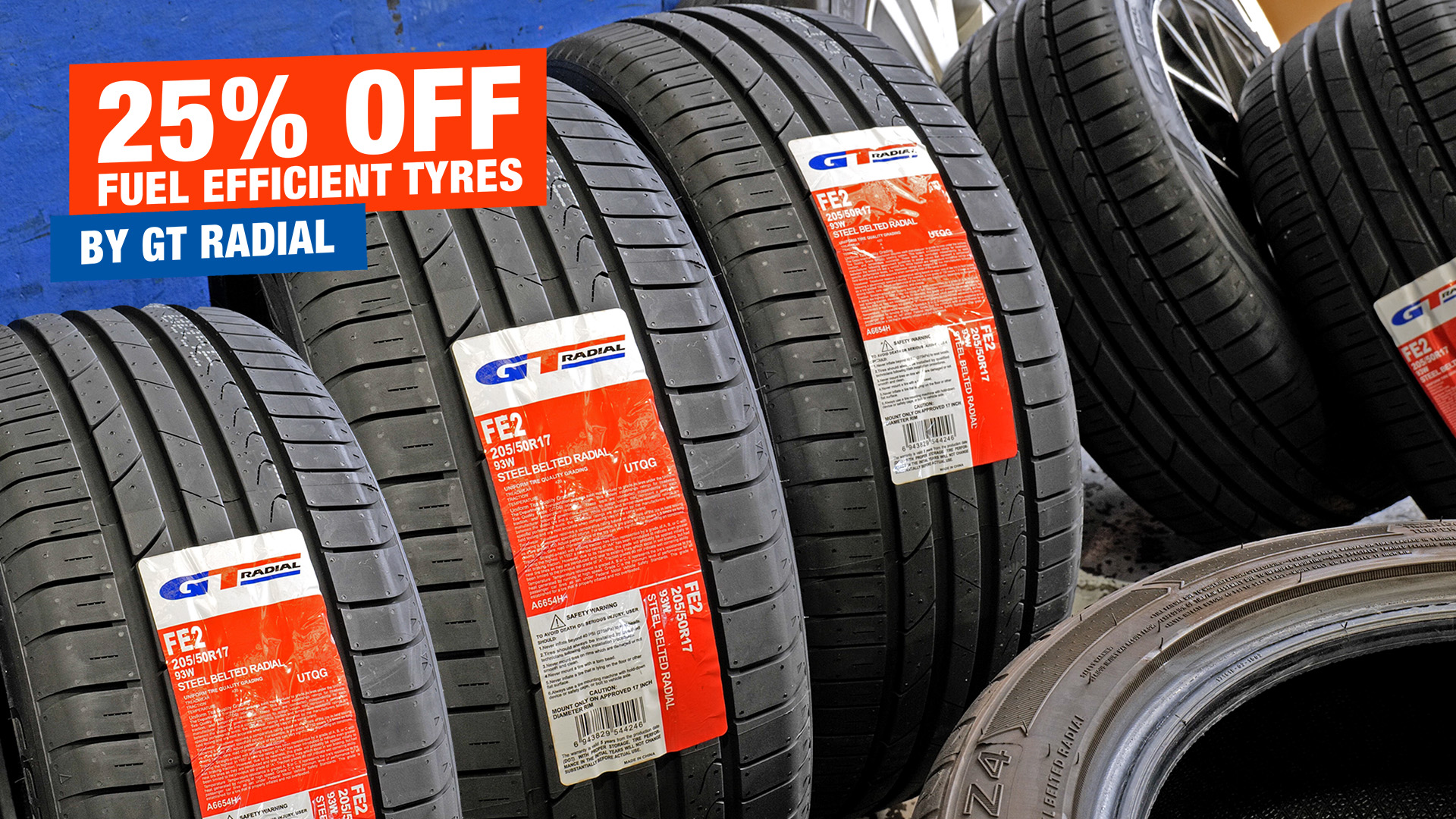
The GT Radial FE2 is built around this principle. The FE in the name stands for fuel efficiency, and the tyre uses compound and tread technology specifically designed to reduce rolling resistance without compromising wet-weather safety. It sits in the middle of the market in terms of price, which makes it a realistic option for everyday Kiwi drivers rather than something reserved for premium vehicles.
The range covers roughly 30 part numbers, spanning small passenger cars through to compact SUVs and CUVs. That covers a wide cross-section of what New Zealanders actually drive, from a hatchback commuter to a family SUV sitting in the driveway.
This is a reasonable question and one worth answering honestly. The savings from a fuel-efficient tyre alone are real but modest. Tyres like the GT Radial FE2 can reduce fuel consumption by approximately five to six percent. That does not sound dramatic, but on a vehicle that regularly fills up to $150, that is close to $9 per tank. Over a year of regular driving, it adds up.
Some manufacturers claim that tyres with a lower rolling resistance can reduce energy use by up to seven percent. The figures vary by tyre, vehicle, and driving conditions, but the principle is consistent across the industry.
Where the real gains come from is combining a fuel-efficient tyre with the right maintenance habits. Tyre choice is the foundation, but it only performs as well as the conditions you put it in.
Incorrect tyre pressure is one of the most common and costly mistakes New Zealand drivers make, and most are not even aware it is happening.
A tyre running below its recommended pressure does not just wear faster. It changes shape under load, collapsing slightly at the contact patch and forcing the tyre to work against itself. The car feels fine to drive, but the engine is quietly burning more fuel on every single trip.
Under-inflated tyres increase rolling resistance, meaning your engine must work harder to move the vehicle. Even slightly low pressure can increase fuel consumption by three to five percent.
The wheelbarrow analogy is a useful one. Push a flat-tyred wheelbarrow loaded with bricks and it is heavy, slow, and draining. Pump it up properly and the same load moves with far less effort. Your car works exactly the same way.
Check your tyre pressure at least once a month and always before a long run. The correct pressure for your vehicle is listed on a sticker inside the driver’s door frame or in your owner’s manual. Do not use the maximum pressure stamped on the tyre sidewall. That is not your target figure.
A wheel alignment problem is one of those issues that costs you money slowly and quietly over time. When your wheels are not pointing in the same direction, the tyres drag against the road rather than rolling freely through it. That drag creates resistance, and resistance burns fuel.
When wheels are out of alignment, tyres drag against the road rather than rolling freely. If your vehicle pulls to one side or the steering wheel feels off-centre, it may be time for an alignment check.
Beyond fuel economy, misalignment affects cornering, braking, and tyre wear. A tyre that is scrubbing against its natural angle wears unevenly and dies well before it should.
At Mag and Turbo, no alignment is carried out without a full pre-check first. Tyre pressures are measured, suspension components are inspected, and worn parts such as tie rods, ball joints, rack joints, and bushes are identified before any adjustment is made. There is no point setting an accurate alignment on a worn suspension; the geometry will not hold and the customer is back in sooner than they should be.
A fuel-efficient tyre works best as part of a wider approach. These are the things that genuinely make a difference.
A roof rack you never use, a roof box that makes you look more adventurous than you are, a boot full of stuff that has lived in the car for six months. All of it adds weight, and extra weight means extra fuel. Remove anything you are not actively using. The car is not a storage unit.
A poorly maintained engine works harder than it needs to, burning more fuel in the process. Keeping up with oil changes, using the correct viscosity oil, replacing air and fuel filters when due, and having fuel injectors cleaned periodically all contribute to an engine that runs at its best. The investment in regular servicing pays back in fuel savings, a longer vehicle life, and a better resale value when the time comes.
This is where some of the biggest fuel savings are available, up to ten to fifteen percent according to commonly cited figures, and it costs nothing to implement. Smooth, progressive acceleration and braking keeps your fuel consumption steady. Good driving habits help tyres last longer and reduce fuel consumption. Hard braking followed by hard acceleration wastes both fuel and tyre life. If you have ever sat in the back of a taxi with a driver who drives on and off the throttle constantly, you already know instinctively what poor fuel economy looks like in practice.
When you are buying tyres with fuel efficiency in mind, there are a few things worth asking about.
First, confirm the tyre is suited to your vehicle and the way you use it. A tyre that saves fuel but underperforms in the wet is a poor trade-off, especially heading into a New Zealand winter. The GT Radial FE2 is rated for wet-weather braking, which matters more than many drivers realise. Most tyre accidents do not happen because someone was driving recklessly in the rain. They happen because a car stopped suddenly ahead and the following driver needed to brake hard, change direction, and react in a fraction of a second. That is when tyre performance becomes very real, very quickly.
Second, ask what happens after the sale. Mag and Turbo backs every set of tyres sold with what they call the Tyre Service Promise: free balance and rotation approximately every 5,000 to 10,000 kilometres for the life of the tyre, free alignment checks on return visits if you purchase an alignment at the time of fitting, and free puncture repairs on repairable tyres. If you buy tyres in one city and need a repair in another, Mag and Turbo stores across the country will assist you at a significant discount.
Mag and Turbo has been in the tyre business for over 30 years. Most of their stores are locally owned and operated, which means the person you deal with in the shop has a direct stake in looking after you properly. That is a different experience from a chain managed remotely from overseas, and it shows in the service.
If you drive a standard passenger car or small to mid-size SUV and you are primarily looking for a tyre that does its job reliably, saves you a measurable amount of fuel, and handles New Zealand’s wet roads safely, the GT Radial FE2 is worth a look. It sits in the middle of the market, not the cheapest option available and not a premium tyre, but a genuine step up from budget tyres in terms of technology and performance.
With approximately 30 size options in the range, it suits a solid proportion of the New Zealand car park. Mag and Turbo is running a 25 percent discount across the full GT Radial FE2 range for the month of May, which brings the cost of upgrading to a fuel-efficient tyre into realistic reach for most households.
Do fuel-efficient tyres actually save money in New Zealand? Yes, in a measurable way. A fuel-efficient tyre can reduce consumption by around five to six percent. Combined with correct tyre pressure and wheel alignment, the total savings are more significant and add up over a full year of driving.
How do I know if my tyre pressure is correct? Check the sticker inside your driver’s door frame or your vehicle’s owner’s manual. Do not rely on feel. A tyre can be significantly under-inflated without looking flat. Check monthly with a quality gauge.
How often should I get a wheel alignment? Most tyre specialists recommend checking alignment annually or after any significant impact, such as hitting a pothole or a kerb. If your vehicle pulls to one side or your steering wheel is off-centre when driving straight, have it checked sooner.
What vehicles does the GT Radial FE2 fit? The range covers small passenger cars through to compact and mid-size SUVs, with approximately 30 part numbers available. Visit your local Mag and Turbo store or check online to confirm fitment for your specific vehicle.
If you want to talk to an expert about how to make your vehicle more fuel efficient, come in and talk to your local Mag and Turbo store today.
Regular maintenance on your petrol or diesel-fuelled vehicle matters way more than you think. Servicing your car is like taking it in for a health checkup – it’s not just
Your tyres are the thing that takes the biggest hit when driving on our sometimes less than ideal New Zealand roads. Plus, they represent one of the most significant ongoing

New Zealanders have always had a love affair with the motor vehicle and personalising them with a new set of aftermarket wheels is often the first modification done! Here at