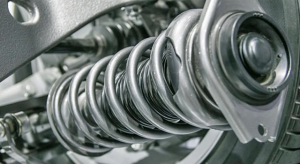

New Zealand’s WOF Rules For Modified Cars In 2026

If you’ve got a modified car in New Zealand, you might be interested to know the Warrant of Fitness (WOF) system is undergoing its most significant overhaul in decades. For modified car owners, the rules around what passes, what fails, and what needs a Low Volume Vehicle (LVV) cert are even more important.

This quick guide from the team at Mag & Turbo Tyre and Service Centre breaks down all the ins and outs of what you need to know to stay legal on New Zealand roads in 2026.

What Is A WOF And Why Does It Matter For Modified Cars?

A Warrant of Fitness (WOF) is a compulsory periodic safety inspection for light vehicles used on New Zealand public roads. It checks everything from brakes and tyres to lights, glazing, structural integrity, steering, and suspension. The system is administered by the New Zealand Transport Agency (NZTA), also known as Waka Kotahi.

For modified cars, the WOF isn’t just a routine check, it’s the gateway to legal road use. Any modification that exceeds defined thresholds requires a Low Volume Vehicle (LVV) Certification before you can obtain a WOF. Get that wrong, and you’re not just facing a WOF fail, you could be looking at a pink sticker, a fine, and a car that can’t legally leave your driveway.

What Is Changing In 2026 - New WOF Frequency Rules

The headline news for 2026 is a major restructure of how often vehicles need a WOF. After a public consultation process that drew feedback from over 5,000 individuals and organisations, the New Zealand Government confirmed WOF changes that take effect from 1 November 2026.

Here’s how the new schedule breaks down:

  • New light vehicles: First WOF now issued for 4 years (previously 3 years)
  • Vehicles 4–14 years old: Move from annual WOFs to a WOF every 2 years (phased introduction)
  • Vehicles over 14 years old: Remain on annual WOFs

The phased rollout for 4–14 year old vehicles means timing depends on when your car was registered:

  • Registered on or after 1 November 2019 → eligible for 2-year WOFs from 1 November 2026
  • Registered between 1 November 2013 and 31 October 2019 → eligible from 1 November 2027

For modified car owners, this is mostly good news – fewer visits to the testing station. But it also means you need your build to be right, because if something goes wrong between inspections, you’re carrying the risk for longer (Information sourced from NZTA – Changes to Light Vehicle Inspections from 1 November 2026).

What About LVV Certification For Modified Vehicles?

Low Volume Vehicle (LVV) Certification is the specialist engineering sign-off required when your modifications go beyond defined thresholds. It sits above a standard WOF, and the important bit is that you need it sorted before you head to a WOF testing station.

The LVV system is managed by the Low Volume Vehicle Technical Association (LVVTA), an independent body that works alongside NZTA. There are over 50 LVV Certifiers across New Zealand, each approved to sign off on specific categories of modifications. Find a LVVTA Certifier here.

When your build is certified, it receives an LVV plate – a physical identifier fitted to a permanent part of the vehicle. In 2026, WOF inspectors are actively cross-referencing these plates against the LVVTA’s official database. If you’re running a fake or unverified plate, that’s an immediate WOF failure. For more information on the rules around modified vehicles, see the NZTA Government – Modifying a Vehicle website.

What Modifications Require An LVV Cert In 2026?

Not every mod needs certification, but many of the ones Kiwi petrolheads love most do. Here’s a breakdown of the top 5 thresholds according to the LVVTA – LVV Certification Threshold Guides.

  1. Engine And Power

The critical number here is 20%. If your modifications increase power or torque by more than 20% over the original manufacturer’s specification, you need an LVV cert. This applies whether you’re naturally aspirated or forced induction.

For turbocharged or supercharged engines, the rules are tighter still. Any ECU remapping or software change intended to alter boost pressure, fuelling, or ignition timing requires certification — even if the power increase stays under 20%. Fitting an aftermarket turbo or wastegate is also an automatic cert requirement.

Minor modifications to fuel injection or ignition systems – including piggyback ECU systems – are WOF-compliant on N/A cars, provided the total power increase stays within that 20% window.

  1. Suspension And Ride Height

Suspension is where many builds come unstuck at WOF time. The rules are clear:

  • Ground clearance below 100mm → LVV cert required
  • Lifted suspension greater than 50mm → cert required
  • Less than 40mm of suspension droop (rebound) travel → cert required
  • Adjustable coilovers (anything with a thread that allows height adjustment) → cert required
  • Direct replacement springs that maintain factory geometry and aren’t height-adjustable → WOF-compliant

Bolt-on sway bars and strut braces are generally fine, provided you haven’t cut or welded the chassis to fit them. Polyurethane bushes and eccentric camber bolts for alignment are also permitted without a cert.

  1. Wheels And Tyres

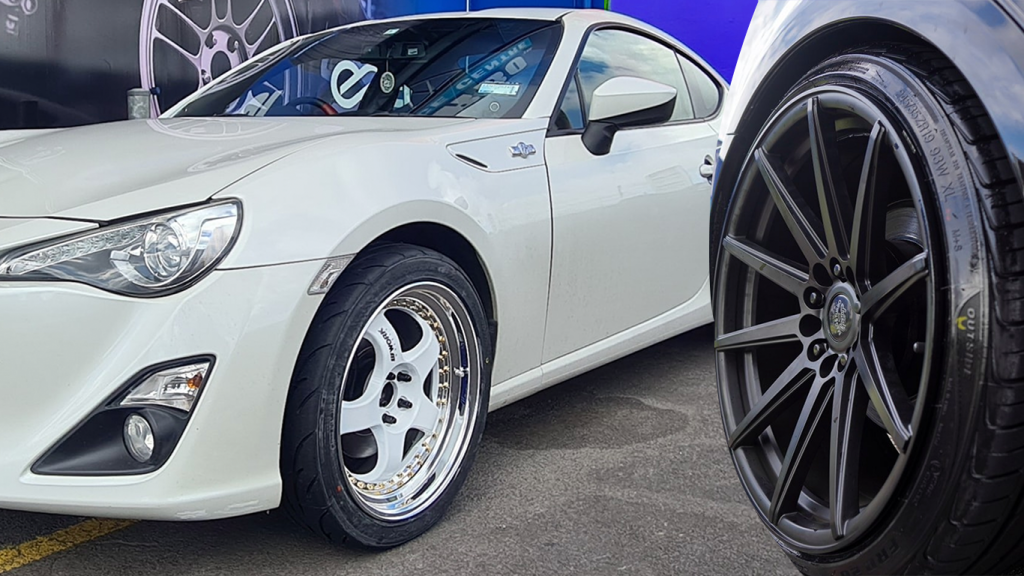
Extreme wheel offsets that push the tread face of the tyres beyond the factory guards more than 25mm, or where the rolling circumference is more than 5% larger than the original equipment specification, require certification. Running stretched tyres can be done legally but there are limitations as advised by the LVVTA Tyre Size to Rim Width Compatibility guide.

  1. Seats And Safety Equipment

Racing seats might look and feel safer, but they bring their own certification requirements. Seats that bolt to factory rails using factory hardware are generally WOF-compliant. However:

  • Any drilling or welding to make a seat fit → cert required
  • Harnesses replacing factory three-point belts → cert required
  • Removing or disabling any airbag (steering wheel, side, curtain) → cert required

Airbag removal is generally only permitted when a vehicle is purpose-built for dedicated motorsport use.

  1. Steering

Steering modifications carry the highest risk profile and NZTA specifically recommends these be handled only by qualified experts. Any changes to steering geometry or components that fall outside OEM spec will require LVV certification.

New For 2026 - ADAS System Checks Added To WOF Inspections

One of the notable additions to the 2026 WOF inspection scope is the inclusion of Advanced Driver Assistance Systems (ADAS). WOF inspectors are now required to check that no warning or malfunction indicators are showing for:

  • Automatic Emergency Braking (AEB)
  • Lane Keep Assist (LKA)

If your vehicle is fitted with these systems and the warning lights are active, it’s a WOF fail. For heavily modified vehicles, particularly those where engine or suspension work may have affected sensors or wiring – this is worth checking before you head to the testing station.

Fines Are Going Up So Don't Get Caught Out!

The reduced frequency of WOF inspections comes with a trade-off – penalties for non-compliance are increasing. Under the new framework, the infringement fee for operating a vehicle with a WOF expired by more than 2 months is set to increase significantly. There are also proposals to introduce demerit points for offences like bald or damaged tyres (something currently only subject to a fine).

Currently, driving with an expired WOF carries a $200 fine. Under unconfirmed proposals, repeat offenders could face both higher fines and licence demerit points. For modified car owners, the message is straightforward: get your cert sorted, keep your documentation up to date, and don’t let your WOF lapse. 

LVV Modified Vehicle Frequently Asked Questions

Does My Modified Car Need A New LVV Cert If I’ve Already Been Certified? Not necessarily. If you haven’t made any further modifications and your registration hasn’t lapsed, your existing certification remains valid. However, if you add new modifications on top of an already-certified build, you’ll need the vehicle re-inspected and a new LVV plate issued covering all modifications.

What’s The Process For Getting LVV Certified? Your first step is finding an LVV Certifier in your area with the right category for your specific modifications. Compile a full list of every modification on the car — including things that seem obvious, like alloy wheels or a gearbox swap. The certifier will inspect the vehicle, and where modifications meet the required standards, they’ll arrange for an LVV plate to be fitted. Costs vary depending on the scope of work.

Can I Import A Modified Car From Japan Or Australia? Modified imported vehicles must be referred to a New Zealand LVV Certifier during entry certification, unless they carry European Community Whole Vehicle Type Approval (ECWVTA). A KAI mark on Japanese deregistration documents indicates the vehicle has been modified and may not meet required standards — check carefully before buying.

What Happens If An Innovative Modification Isn’t Covered By Existing LVVTA Standards? You can apply to the LVVTA’s Technical Advisory Committee (TAC) for approval of a variation from a technical requirement. The TAC will review your proposal and may request additional testing or engineering calculations. Approved variations are sometimes published on the LVVTA website for broader guidance.

The Bottom Line For Kiwi Modified Car Builders

Although New Zealand’s WOF system is changing in 2026, for the modified car community, it’s mostly a positive shift. Fewer inspections mean less downtime and lower compliance costs. But with fewer check-ins comes greater personal responsibility. Your build needs to be right, your LVV cert needs to be current, and your documentation needs to be in order.

If you’re planning a build or modification and want to know exactly where your current setup sits relative to the thresholds, always talk to an LVV Certifier before you get started! Looking for more helpful tips and advice on tyres, ag wheels or suspension kits? Check out the Mag & Turbo blog here!

Related Articles

Going Big On Your Wheels And Tyres?

New Zealanders have a strong affinity for their 4×4 vehicles. Whether it’s heading out with the boat on the weekend, taking it off-road for a
5 Warning Signs Your Tyres Need Replacing (That Aren’t Tread Depth)

Although tyre tread depth is the classic metric everyone talks about when it comes to replacing your tyres, it’s only one piece of the safety
Choosing The Right Mag Wheels For Your Ride

New Zealanders have always had a love affair with the motor vehicle and personalising them with a new set of aftermarket wheels is often the